
Acoustic Ceiling Boards vs Panels: Which Type Suits Your Space?
Noise can have a major impact on how comfortable and functional an indoor space feels. Offices need quieter areas for concentration, schools require classrooms where speech can be heard clearly, and commercial buildings often need solutions that reduce echoes across large open areas. Choosing the right ceiling material can therefore contribute to both the appearance and acoustic performance of an interior.
Two options commonly considered are acoustic ceiling boards and acoustic ceiling panels. Although the terms are sometimes used interchangeably, the products can differ in format, installation method, appearance and suitability for particular environments. Understanding how an acoustic ceiling board differs from a panel can help property owners, architects and contractors make a more informed decision before planning a ceiling system.
What Is an Acoustic Ceiling Board?
An acoustic ceiling board is a ceiling product designed to help manage sound within an indoor environment. These boards are commonly installed as part of suspended ceiling systems or other ceiling structures where both appearance and acoustic performance need to be considered.
Instead of allowing sound to repeatedly reflect from hard ceiling surfaces, acoustic boards can help absorb some of that sound energy. This may contribute to a more comfortable indoor environment, particularly in spaces where conversation, machinery, movement or general activity creates continuous background noise.
Acoustic ceiling boards may be suitable for:
- Offices and meeting rooms
- Schools and educational facilities
- Hospitals and healthcare environments
- Hotels
- Restaurants
- Retail properties
- Commercial buildings
- Conference rooms
- Reception areas
Their structured format can make them particularly practical for projects where contractors need a uniform ceiling finish across a larger area.
What Are Acoustic Ceiling Panels?
Acoustic ceiling panels are also designed to support sound management, but they may provide greater flexibility in terms of placement, shape, design and visual effect.
Panels can be incorporated into complete ceiling systems or strategically positioned in particular parts of a room where sound control is especially important. Depending on the product and project requirements, they may be installed directly, suspended from the structural ceiling or incorporated into a grid system.
Acoustic ceiling panels can therefore provide both a functional and decorative role.
For example, a designer may use acoustic panels above workstations, meeting zones or reception areas rather than installing exactly the same ceiling treatment throughout an entire room.
Acoustic Ceiling Boards vs Acoustic Ceiling Panels
Both products can contribute to better acoustic conditions, but the best option depends on the project.
Acoustic Ceiling Boards
Acoustic ceiling boards are generally well suited to projects requiring:
- Consistent ceiling coverage
- A uniform appearance
- Suspended ceiling grids
- Large commercial spaces
- Easy access above the ceiling
- An organized modular layout
They can be a practical choice where the ceiling forms part of the wider building-services strategy.
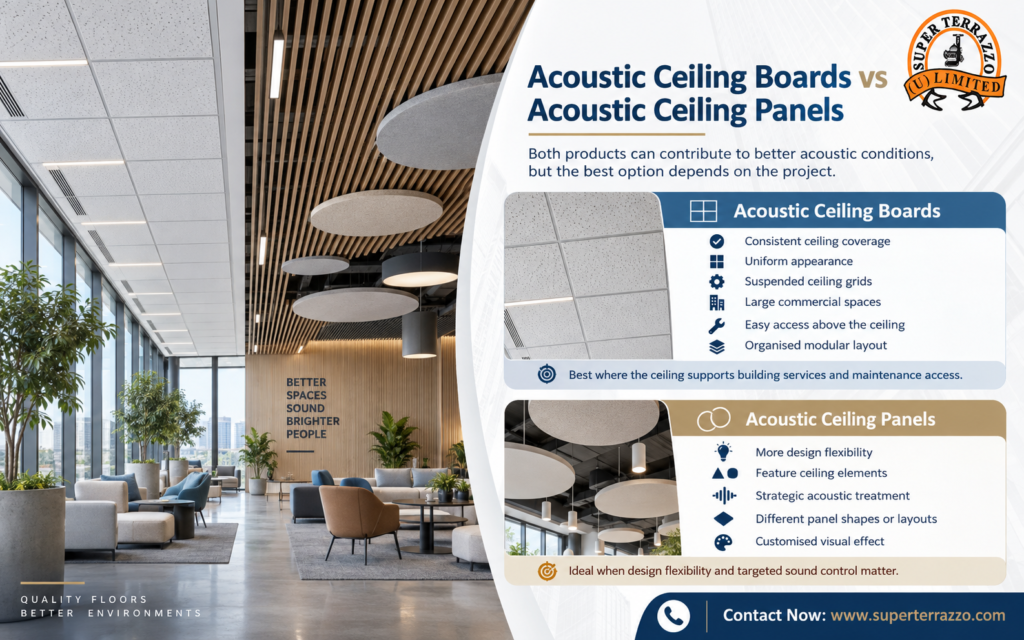
Acoustic Ceiling Panels
Acoustic ceiling panels may be preferred where a project requires:
- More design flexibility
- Feature ceiling elements
- Strategic acoustic treatment
- Different panel shapes or layouts
- A more customized visual effect
Neither option is automatically better. The most suitable product depends on how the room is used, its ceiling structure, design objectives and acoustic requirements.
Consider the Purpose of the Space
The first question to ask is not simply which product looks better. It is how the room will actually be used.
Offices
Modern offices may include open workstations, meeting areas, collaborative zones and private offices within the same building.
In open spaces, controlling excessive sound reflections can help create a more manageable environment. Acoustic boards may provide consistent ceiling coverage, while panels can be positioned in areas where conversations and activity are concentrated.
Schools
Classrooms depend heavily on clear communication.
Too much reverberation can make spoken instructions more difficult to hear, particularly in larger classrooms. Well-planned acoustical ceilings can help support a more suitable learning environment by reducing unwanted sound reflections.
Healthcare Facilities
Hospitals, clinics and medical centers often contain waiting areas, corridors, consultation rooms and administration spaces.
Each area may have different requirements. Ceiling systems should also be selected with maintenance, accessibility and overall interior design in mind.
Hospitality and Commercial Interiors
Restaurants, hotels, conference facilities and reception spaces often need to balance appearance with practical acoustic control.
Decorative panels may complement the interior design, while ceiling boards can work effectively across larger areas where a consistent finish is preferred.
How Sound Absorption Influences the Decision
One of the main reasons for considering acoustic ceiling products is sound absorption.
Hard surfaces such as concrete, glass and some wall finishes can reflect sound back into a room. When there are many reflective surfaces, voices and other noises may continue travelling through the space rather than being absorbed.
This can increase reverberation and make busy spaces feel louder.
The purpose of acoustic ceiling materials is not necessarily to make a room completely silent. Instead, they can form part of a wider acoustic design strategy intended to manage reflections and improve the overall sound environment.
When comparing acoustic ceiling panels with boards, consider the acoustic specifications of the individual product rather than choosing solely on appearance.
Different products can provide different sound absorption characteristics, which is why room size, layout and intended use should all be considered before making a final selection.
Think About Ceiling Access and Building Services
Commercial ceilings often conceal important building services, including:
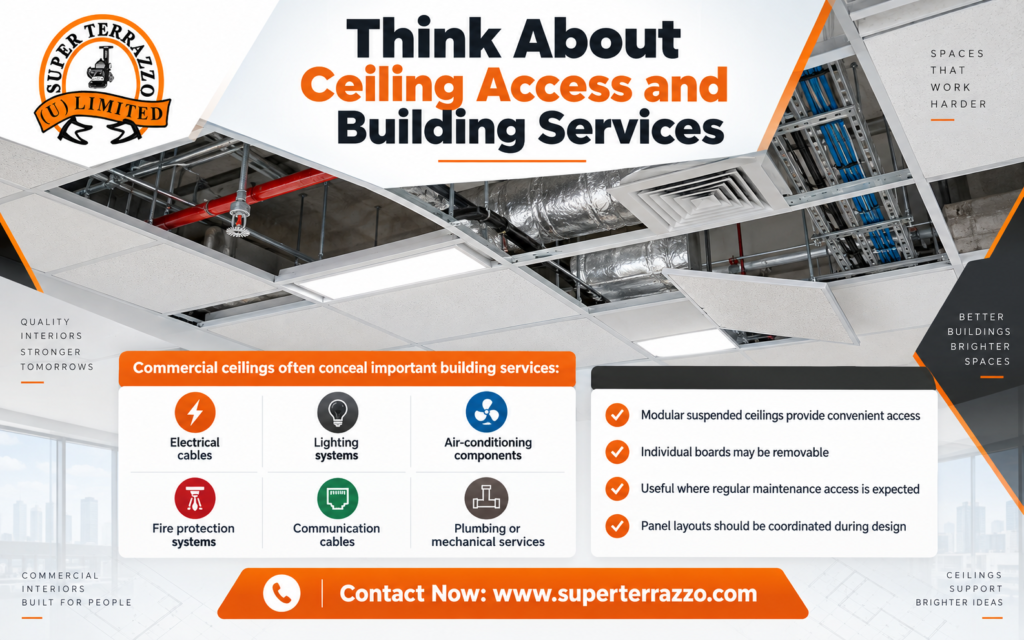
- Electrical cables
- Lighting systems
- Air-conditioning components
- Fire protection systems
- Communication cables
- Plumbing or mechanical services
A modular suspended ceiling can provide convenient access to these services.
Individual ceiling boards may be removable, allowing contractors or maintenance teams to reach the area above without dismantling an entire ceiling. For buildings where regular maintenance access is expected, this can be an important consideration.
Panels may also work successfully around services, but their layout should be coordinated carefully during the design stage.
Appearance and Interior Design
A ceiling occupies a large visual area, so its design can influence how an entire room feels.
Acoustic boards are often selected where architects want a neat, consistent and organized ceiling pattern.
Panels can allow greater visual experimentation. Depending on the system, they may be used to create:
- Geometric arrangements
- Feature ceiling zones
- Suspended elements
- Layered ceiling designs
- Defined spaces within open-plan interiors
The right choice should complement the walls, flooring, lighting and overall architectural character of the property.
Explore More Ceiling Design Ideas
Choosing the right acoustic ceiling is only one part of creating a well-planned interior. Ceiling style, materials, lighting integration and overall room design also influence the final appearance of a space.
Read more: Modern Ceiling Designs for Luxury Homes to explore different ceiling styles, materials and ideas for creating refined and functional interiors.
Installation Requirements
Installation should be considered before selecting the final ceiling material.
Some acoustic boards are designed specifically for suspended ceiling grids, which can make planning relatively straightforward when the building already uses this type of ceiling structure.
Panels may require different mounting systems depending on their design and location.
Before installation begins, contractors should consider several important factors.
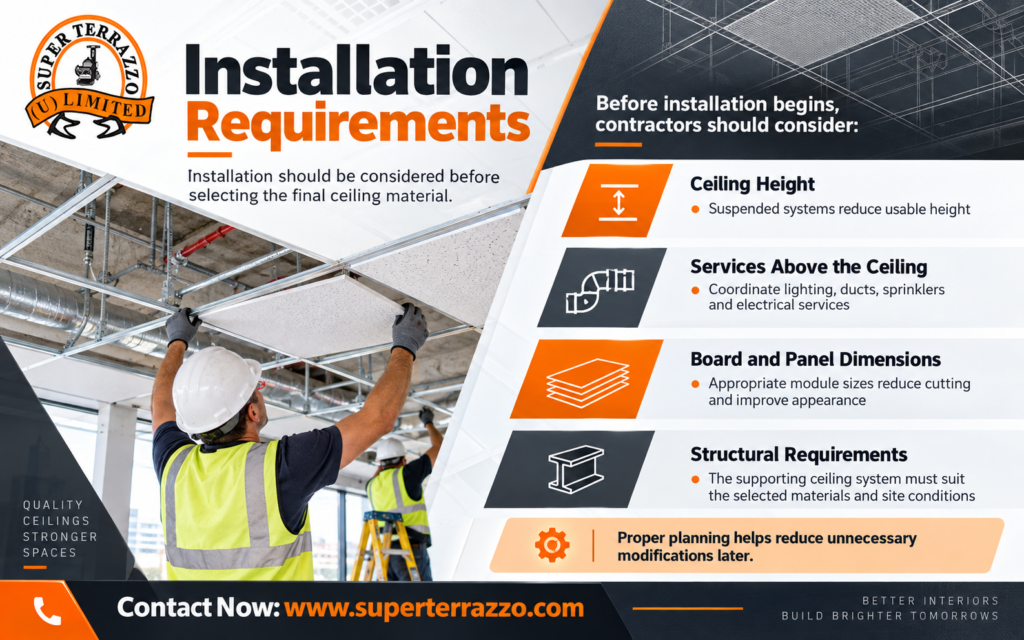
Ceiling Height
Suspended systems reduce the usable height between the original structural ceiling and the finished ceiling surface. Available ceiling height should therefore be checked early in the planning process.
Services Above the Ceiling
Lighting, ventilation ducts, sprinklers and electrical services should be coordinated with the ceiling layout.
Board and Panel Dimensions
Using appropriate module sizes can reduce unnecessary cutting and help create a cleaner finished appearance.
Structural Requirements
The supporting ceiling system must be suitable for the selected materials and the conditions of the project.
Proper planning before installation can help reduce unnecessary modifications later.
Maintenance and Long-Term Practicality
Maintenance is another important factor, particularly for commercial properties.
Ceiling products should be selected based not only on how they look when newly installed but also on how practical they will be over time.
Consider:
- Ease of cleaning
- Access to building services
- Ability to replace damaged sections
- Moisture conditions
- Dust exposure
- Frequency of maintenance
- Future modifications to lighting or services
In modular systems, individual boards can often be accessed or replaced without changing the entire ceiling. This can be useful for properties where building systems are regularly inspected or updated.
Which Option Is Better for Large Spaces?
Large commercial or institutional buildings often benefit from a combination of consistent ceiling coverage and targeted acoustic design.
For example, a large office could use acoustic ceiling boards across general workstation areas while using decorative panels above collaboration zones or reception spaces.
Similarly, a hotel could use a modular ceiling system in corridors and functional areas while incorporating feature panels in lounges, restaurants or meeting facilities.
The decision does not always have to be boards versus panels. In some projects, combining both solutions can provide a balanced result.
Questions to Ask Before Choosing
Before selecting an acoustic ceiling product, consider these questions:
- What is the main purpose of the room?
- How much background noise is normally present?
- Are there many hard, reflective surfaces?
- Is regular access above the ceiling required?
- What ceiling height is available?
- Does the project require a uniform or decorative finish?
- Are lighting and air-conditioning systems already planned?
- What maintenance will be required?
- Does the selected product suit the existing ceiling structure?
Answering these questions can make product selection easier and help avoid unsuitable choices later in the project.
Frequently Asked Questions
What is the difference between acoustic ceiling boards and acoustic ceiling panels?
Acoustic ceiling boards are commonly used as modular components within suspended ceiling systems and can provide consistent coverage across a room. Acoustic ceiling panels may offer greater flexibility in shape, position and design, allowing them to be used for targeted acoustic treatment or decorative features.
Where are acoustic ceiling boards commonly used?
They may be used in offices, classrooms, hospitals, hotels, conference rooms, reception areas and other commercial or institutional spaces where sound management and a structured ceiling finish are important.
Do acoustic ceiling panels completely block sound?
Acoustic ceiling panels are generally intended to help absorb sound and reduce excessive reflections within a room. They should not automatically be considered a complete soundproofing solution. The overall acoustic performance of a space depends on the ceiling, walls, floors, doors and other building elements.
Are acoustic ceilings suitable for offices?
Yes. Acoustic ceiling materials can be particularly useful in offices where conversations, telephones, meetings and general workplace activity contribute to background noise. The most suitable system will depend on the office layout and acoustic requirements.
Can acoustic ceiling boards be replaced individually?
In many modular suspended ceiling systems, individual boards can be removed and replaced. This can make maintenance easier and provide access to electrical, ventilation or other services above the ceiling.
Can acoustic panels be used as a design feature?
Yes. Depending on the product and installation system, acoustic panels can be arranged to create visually distinctive ceiling areas while also contributing to sound management.
How do I choose between boards and panels?
Consider room usage, ceiling height, required access to building services, interior design, maintenance needs and acoustic requirements. For complex commercial projects, discussing these requirements with an experienced ceiling supplier can help narrow down the available options.
Why Choose Super Terrazzo?
Super Terrazzo supplies a broad range of building and interior finishing solutions for residential, commercial and institutional projects. Alongside terrazzo, marble, granite and other ceiling products, the company provides acoustic ceiling solutions for different design and functional requirements.
Working with an experienced supplier can make it easier to compare available materials, coordinate ceiling components and choose products that suit the building’s intended use. Super Terrazzo can support projects ranging from offices and educational facilities to healthcare, hospitality and other commercial spaces.
Whether your project requires sound-conscious ceiling solutions for a single room or a larger development, Super Terrazzo can help you explore suitable acoustical ceilings and related ceiling products based on your project requirements.
Final Thoughts
Acoustic ceiling boards and acoustic ceiling panels both have useful roles in modern interior design. Boards are often suitable for consistent modular ceiling systems and larger areas, while panels can provide more flexibility for feature zones and targeted acoustic treatment.
The most appropriate option depends on room usage, ceiling structure, available height, building services, maintenance needs, acoustic requirements and the desired appearance. Considering these factors early can help property owners, designers and contractors choose a ceiling solution that supports both functionality and visual design.