
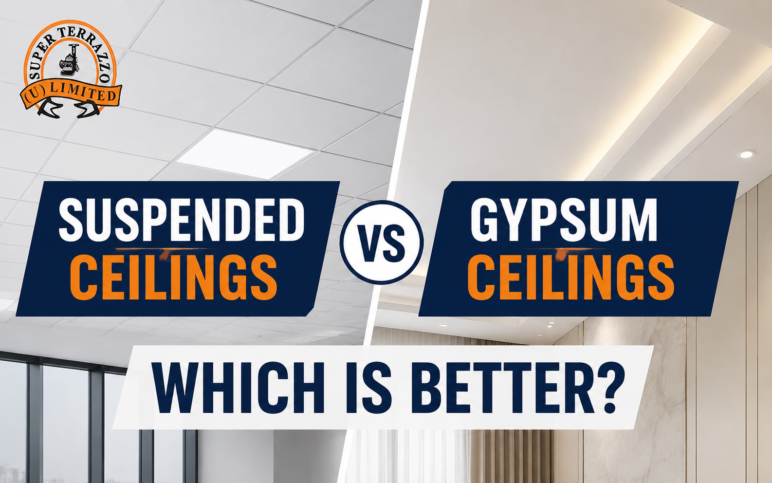
Suspended Ceilings vs Gypsum Ceilings: Which Is Better?
Choosing the right ceiling affects how a room looks, functions and performs over time. Two popular options for modern buildings are gypsum ceilings and suspended ceilings. Both can conceal wiring, improve interior appearance and support lighting, but they are constructed differently and suit different project requirements.
A gypsum board ceiling creates a smooth, continuous surface that can be shaped into decorative designs. A suspended ceiling, also called a dropped or grid ceiling, is installed below the structural ceiling using a metal framework and removable tiles. Understanding their differences will help you select the right option for a home, office, school, hotel or commercial property.
What Is a Gypsum Ceiling?
A gypsum ceiling is made from gypsum boards fixed to a framework of metal channels. The joints are filled and finished to create a clean surface that can be painted. This system is widely used in living rooms, bedrooms, reception areas and offices where appearance is a priority.
Different boards are available for different environments. Regular boards suit standard dry interiors, while moisture-resistant boards may be selected for humid areas. Fire-resistant products can also be specified when a project requires additional fire performance.
Main Benefits of Gypsum Ceilings
Gypsum ceilings can provide:
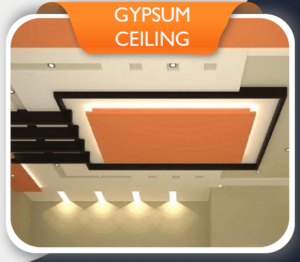
- A smooth and seamless finished appearance
- Flexible designs, including curves and recessed sections
- Easy integration of spotlights and LED strips
- Space for hiding electrical wiring
- A paintable surface in different colors
- Options for residential and commercial interiors
A gypsum board ceiling can become an important design feature. Decorative borders, layered sections and lighting details can give an interior a customized and luxurious appearance.
What Is a Suspended Ceiling?
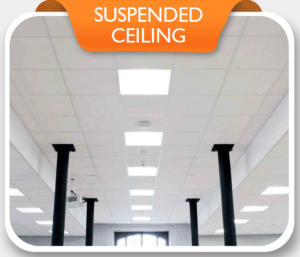
A suspended ceiling consists of a metal grid fitted below the roof or structural slab. Individual ceiling tiles are placed inside the grid, while the space above can accommodate cables, air-conditioning components, pipes and other services.
Unlike a fixed gypsum finish, the tiles can usually be lifted when technicians need access. This makes a suspended ceiling practical for offices, schools, clinics, shops and conference rooms where maintenance access is important.
Main Benefits of Suspended Ceilings
Suspended systems can offer:
- Convenient access to wiring and mechanical services
- Simple replacement of individual damaged tiles
- A neat and organized ceiling layout
- Compatibility with lighting and ventilation systems
- Different tile patterns, textures and finishes
- Acoustic and moisture-resistant options
Suspended ceiling panels are useful in buildings where services may change over time. New cables, lights or ventilation components can often be installed without rebuilding the entire ceiling.
Suspended Ceilings vs Gypsum Ceilings: Key Differences
1. Appearance and Design Flexibility
Gypsum is usually better when the goal is a smooth, decorative and customized ceiling. It can form multiple levels, recessed areas and curves, making it popular for homes, hotels, restaurants and reception areas.
Suspended ceilings have a modular appearance because the grid remains visible. Modern tiles can still create an attractive finish, but the overall look is generally more practical and uniform.
2. Access to Building Services
A suspended system allows selected tiles to be lifted, providing direct access to network cables, plumbing, fire systems and air-conditioning equipment. This is valuable in buildings requiring regular inspection or upgrades.
A gypsum ceiling creates a closed surface. Access panels can be included, but some repairs or changes may require cutting and refinishing sections of the ceiling.
3. Installation Time
A basic grid ceiling can often be assembled efficiently because tiles are placed into a prepared framework. Extensive joint treatment and painting may not be needed.
Gypsum installation includes fixing boards, treating joints, sanding and painting. Decorative designs also require additional labor and careful finishing, so the complete process may take longer.
4. Repairs and Maintenance
A stained or damaged suspended tile can usually be replaced without affecting the surrounding ceiling. The replacement should match the existing size, pattern and color.
Gypsum damage can also be repaired, but cracks, stains or openings may require filling, sanding and repainting. Professional finishing helps prevent visible patches.
5. Acoustic Performance
Certain suspended tiles are designed to absorb sound, making them suitable for classrooms, meeting rooms and offices where echo control is important.
Gypsum can also support acoustic performance when combined with insulation, suitable board layers and correct construction. The materials should be selected according to the sound-control needs of the room.
6. Moisture and Fire Requirements
The ceiling should not be selected by appearance alone. Kitchens, washrooms and humid spaces may require moisture-resistant materials, while some public or commercial projects may require fire-resistant systems.
For gypsum, the correct board and framework must be selected. For suspended systems, suitable tiles, grids and accessories are needed. Performance depends on the complete system and the quality of installation.
Which Ceiling Is Better for Different Spaces?
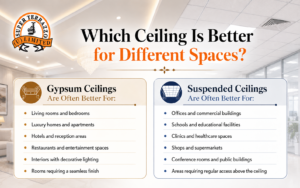
Gypsum Ceilings Are Often Better For:
- Living rooms and bedrooms
- Luxury homes and apartments
- Hotels and reception areas
- Restaurants and entertainment spaces
- Interiors with decorative lighting
- Rooms requiring a seamless finish
Suspended Ceilings Are Often Better For:
- Offices and commercial buildings
- Schools and educational facilities
- Clinics and healthcare spaces
- Shops and supermarkets
- Conference rooms and public buildings
- Areas requiring regular access above the ceiling
Some projects can combine both systems. A reception area may use a decorative gypsum feature, while nearby offices use removable ceiling tiles for easier maintenance.
Cost: Which Option Is More Affordable?
There is no fixed answer because cost depends on room size, ceiling height, materials, framework, design complexity and labor. A simple suspended grid can be economical for a large commercial space, while premium acoustic or specialized tiles may cost more.
A basic gypsum ceiling can also be cost-effective, but layered designs, curves and recessed lighting increase material and labor requirements. Compare complete quotations rather than only the price of boards or tiles.
A reliable quotation should consider:
- Ceiling area and room dimensions
- Type and quality of boards or panels
- Grids, channels and accessories
- Moisture, fire or acoustic requirements
- Lighting and service openings
- Installation and finishing work
- Future repair and replacement needs
Why Choose Super Terrazzo?
Super Terrazzo supplies ceiling materials and supports residential, commercial and public projects in Uganda. Its range includes regular, moisture-resistant and fire-resistant gypsum boards, channels and ceiling accessories, as well as grids and suspended ceiling panels in different styles.
Customers can receive guidance based on the room, design, performance requirements and budget. Working with an experienced supplier helps ensure compatible materials are selected and the finished ceiling is durable, safe and professionally installed.
Final Verdict
Gypsum ceilings are generally better when custom shapes, decorative details and a seamless painted finish are the priorities. Suspended ceilings are often better when easy service access, tile replacement, acoustic performance and commercial practicality matter most.
The right choice depends on the purpose of the room, future maintenance, environmental conditions, design expectations and total project cost. Have the space assessed before purchasing materials and discuss the complete system with a knowledgeable supplier or installer. This will help create a ceiling that looks good, performs reliably and supports the long-term needs of the building.